Jeep Grand Cherokee P0456: Evaporative Emission System Leak Detected (Very Small Leak)
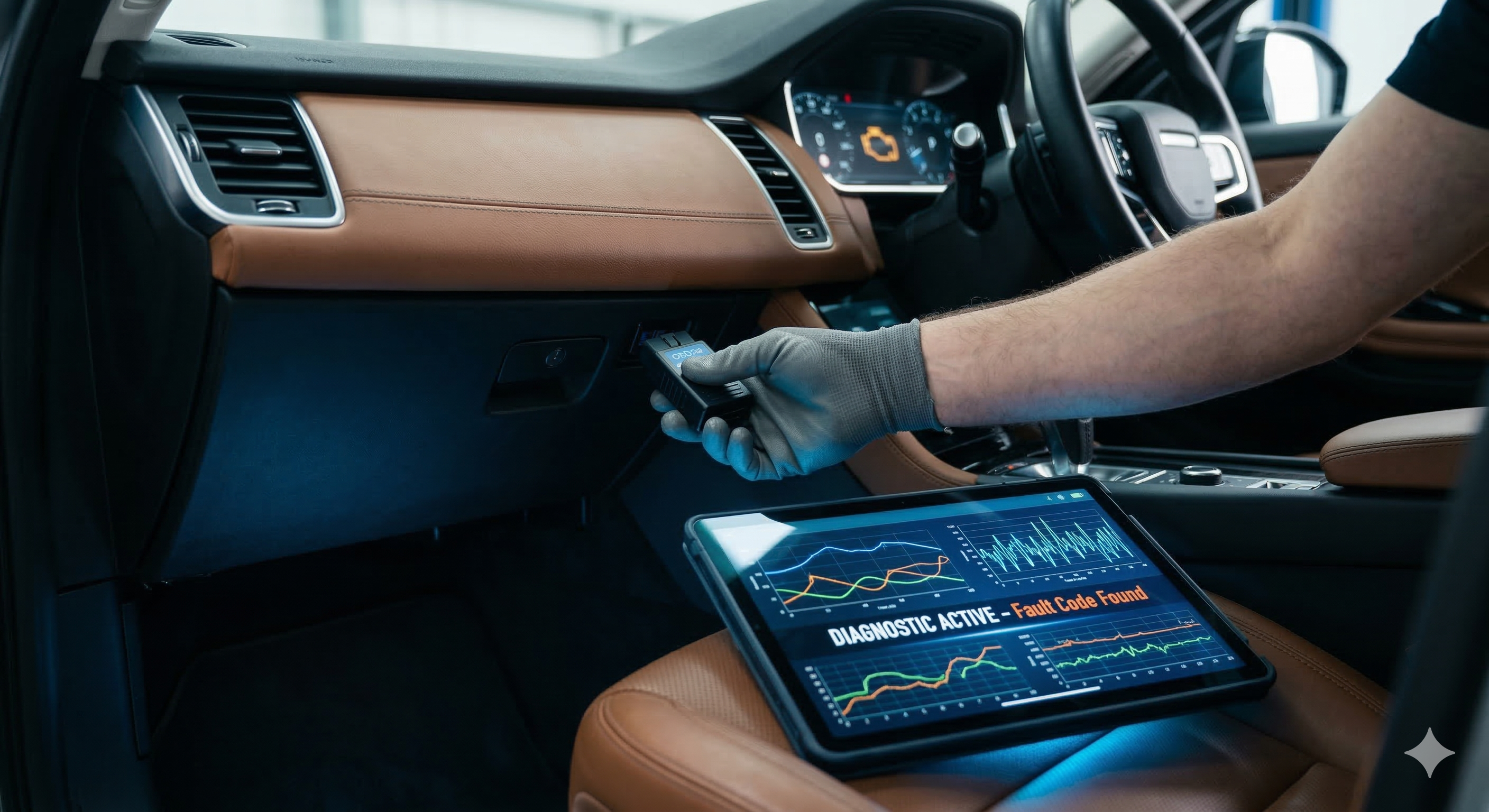
Quick Answer: What is P0456?
On a Jeep Grand Cherokee, the P0456 code means the Powertrain Control Module (PCM) has detected a microscopic leak (less than 0.020 inches) in the fuel vapor system. On Jeep models (2011-2022), this is overwhelmingly caused by a cracked ESIM (Evaporative System Integrity Monitor) seal or a faulty gas cap.
Common Symptoms
- Check Engine Light: Solidly on with code P0456.
- Remote Start Disabled: The SUV honks but won't start via the key fob.
- "Check Gas Cap" Light: Occasionally appears on the instrument cluster.
- No Performance Issues: The engine runs smoothly without any loss of power.
Most Likely Causes
- Faulty ESIM Detector (60%): Located on the charcoal canister; its internal O-ring or diaphragm degrades over time.
- Worn Gas Cap (25%): The seal has flattened or has tiny hairline cracks.
- Cracked EVAP Hoses: Small plastic or rubber lines near the engine or tank that have become brittle.
- Purge Valve Leak: The solenoid under the hood is not sealing 100% when closed.
Detailed Repair Cost Breakdown
Estimates for Jeep Grand Cherokee (3.6L and 5.7L) in the US market:
| Component / Task | Aftermarket Part | OEM Mopar Part | Labor Time |
|---|---|---|---|
| ESIM Solenoid/Monitor | $30 - $55 | $75 - $110 | 0.5 hr (Easy DIY) |
| Gas Cap | $15 - $25 | $40 - $60 | 0.0 hr (DIY) |
How to Fix P0456 on a Jeep Grand Cherokee
1. The "ESIM" Solution (Common Fix)
On Jeep models, the ESIM (Evaporative System Integrity Monitor) is a small white or black plastic box attached to the charcoal canister (located under the rear of the SUV). It uses a weighted internal seal that often gets dirty or fails. Replacing this $30-$50 part is the #1 "fix" for P0456 on Grand Cherokees. It takes about 10 minutes to swap out with basic tools.
2. Inspect the Gas Cap O-Ring
Remove your gas cap and look at the black rubber ring. If it looks dry or cracked, or if the cap doesn't feel like it "clicks" firmly, buy a Genuine Mopar gas cap. Aftermarket caps are famous for not sealing well enough to satisfy Jeep's sensitive EVAP sensors.
3. Perform a Smoke Test
If the ESIM and gas cap don't solve the problem, the leak is likely a tiny crack in a plastic line on top of the fuel tank or near the engine. A professional smoke test is the only way to find a "Very Small Leak." A technician will pump safe smoke into the system; wherever the smoke escapes, that's your leak.