P0420 Jeep Grand Cherokee: Catalyst System Efficiency Below Threshold (Bank 1)
Quick Answer: What is P0420?
On a Jeep Grand Cherokee, the P0420 code indicates that the Powertrain Control Module (PCM) has detected the Bank 1 catalytic converter is no longer cleaning exhaust emissions efficiently. While this often means a worn-out catalytic converter, on the popular 3.6L Pentastar V6, this is frequently triggered by a false reading caused by a cracked exhaust manifold or an exhaust leak before the downstream oxygen sensor.
Common Symptoms
- Check Engine Light: Solidly on with code P0420.
- The "Pentastar Tick": A noticeable ticking noise from the engine bay when cold, indicating an exhaust leak.
- Sluggish Acceleration: The SUV struggles to get up to highway speeds.
- Sulfur Odor: A "rotten egg" smell coming from the tailpipe.
Most Likely Causes
- Exhaust Manifold Leak (40%): Extremely common on the 3.6L V6; the manifold cracks or the bolts snap, pulling in unmetered air.
- Failed Catalytic Converter (40%): The precious metals are depleted or the core has melted due to age and heat.
- Faulty Downstream O2 Sensor: The sensor monitoring the converter (Bank 1, Sensor 2) is coated in carbon and failing.
- Engine Misfires: A recent P0300 code that dumped raw fuel into the exhaust, destroying the converter.
Detailed Repair Cost Breakdown
Estimates for Jeep Grand Cherokee (3.6L V6 and 5.7L V8) in the US market:
| Component / Task | Aftermarket Part | OEM Mopar Part | Labor Time |
|---|---|---|---|
| Catalytic Converter (Bank 1) | $350 - $600 | $1,100 - $1,600 | 2.0 - 3.0 hrs |
| Exhaust Manifold (3.6L V6) | $150 - $250 | $300 - $450 | 3.0 - 4.5 hrs |
| Downstream O2 Sensor | $45 - $75 | $120 - $180 | 0.5 - 1.0 hr |
How to Fix P0420 on a Jeep Grand Cherokee
1. Listen for the "Tick" First
Do not buy a $1,000 catalytic converter without checking for exhaust leaks. Start the Jeep when the engine is completely cold. Open the hood and listen closely to the sides of the engine. If you hear a rapid "tick-tick-tick" that goes away or gets quieter as the engine warms up, you have a cracked exhaust manifold or broken manifold bolts. Fixing this leak will often permanently cure the P0420 code.
2. Test the O2 Sensors with Live Data
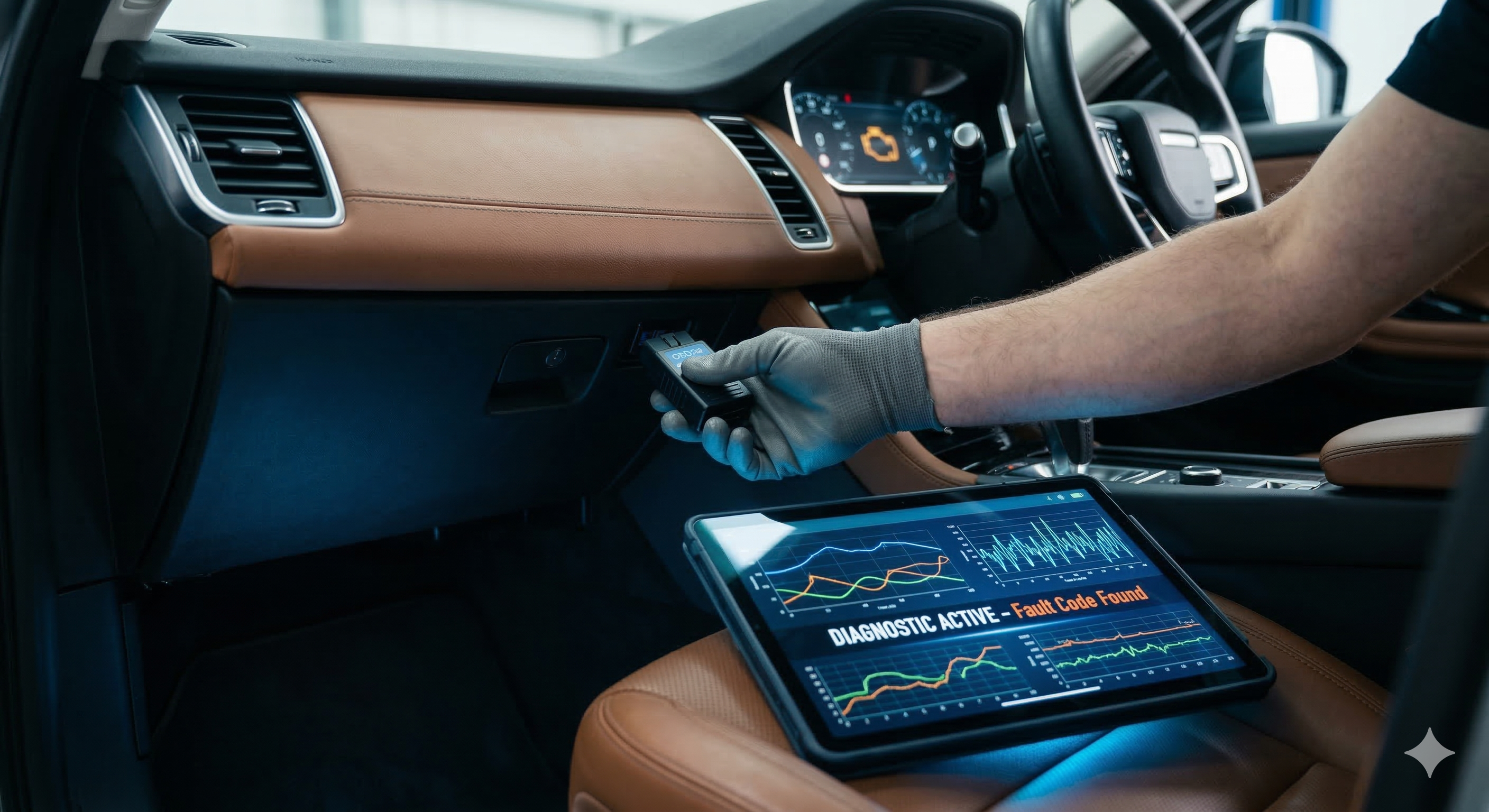
If there are no exhaust leaks, hook up an OBD2 scanner. Monitor the voltage for Bank 1, Sensor 2 (the sensor after the catalytic converter on the driver's side of a V6). It should read a steady line around 0.6V to 0.7V. If the voltage fluctuates rapidly between 0.1V and 0.9V matching the upstream sensor, the catalytic converter has failed.
3. Address Oil Consumption
If your Jeep has high mileage and is burning oil (a common issue on older 5.7L Hemi V8s), that oil ash will quickly clog a brand new catalytic converter. You must fix the internal engine oil leak (like bad valve stem seals or PCV valve) before investing in a new emissions system.