P0420 Code on 2018 Ford F150: Catalyst System Efficiency Below Threshold (Bank 1)
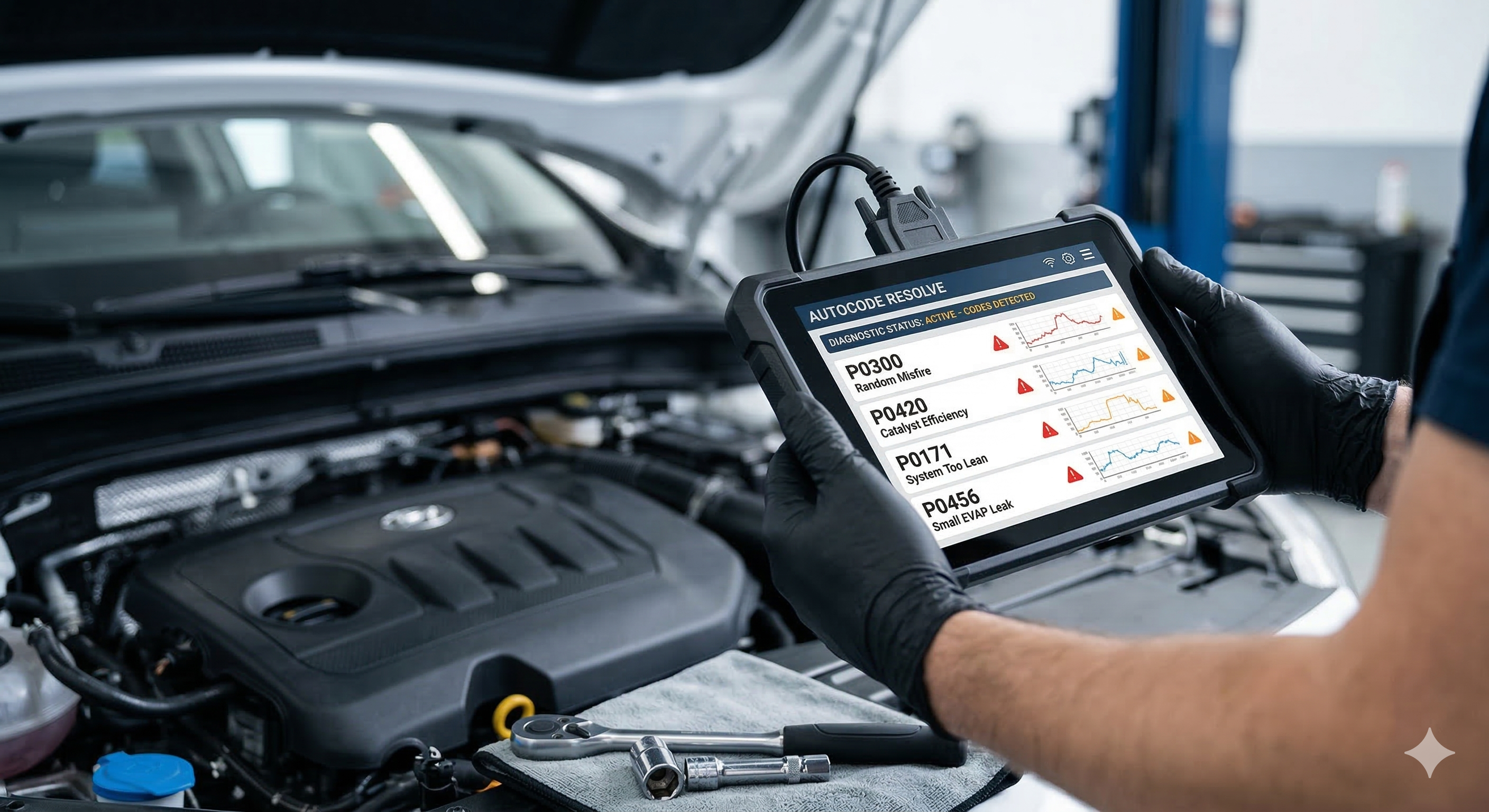
Quick Answer: What is P0420?
On a 2018 Ford F150, the P0420 code indicates that your vehicle's catalytic converter is not working efficiently to reduce exhaust emissions. The most common causes are a failed catalytic converter, a bad downstream oxygen (O2) sensor, or an exhaust leak.
1. Common Symptoms in a 2018 F150
Besides the illuminated Check Engine Light on your dashboard, you might notice:
- Rotten Egg Smell: A strong sulfur odor coming from the exhaust pipe (a classic sign of a failing cat).
- Sluggish Acceleration: The truck feels heavier and lacks power when merging onto the highway.
- Rattling Noise: A metallic rattling sound from underneath the truck when idling (broken internal honeycomb inside the converter).
- Increased Exhaust Emissions: Noticeable dark smoke from the tailpipe.
2. Most Likely Causes (Ranked by Probability)
Before replacing expensive parts, consider what usually triggers this code on the 2018 F150 (especially the 3.5L and 2.7L EcoBoost engines):
- Faulty Catalytic Converter (50% of cases): Over time, or due to unburnt fuel hitting the exhaust, the internal elements melt or break down.
- Bad Downstream Oxygen Sensor (30% of cases): The O2 sensor located *after* the catalytic converter is responsible for monitoring its efficiency. If the sensor is dead, it throws a false P0420 code.
- Exhaust Leaks (15% of cases): A crack in the exhaust manifold or a rusted pipe before the O2 sensor lets fresh air in, confusing the computer.
- Engine Misfires (5% of cases): Bad spark plugs sending unburnt fuel into the exhaust, destroying the converter.
3. Step-by-Step Diagnostic and Fix
Step A: Check for Exhaust Leaks First
Start the truck and safely listen underneath near the engine and the catalytic converter. If you hear a "ticking" noise or feel air puffing out of the pipes before the converter, you have a leak. Weld or patch the leak, clear the code, and see if it returns.
Step B: Test the Oxygen Sensors
Using a live-data OBD2 scanner, monitor the voltage of the downstream O2 sensor (Bank 1, Sensor 2). A healthy catalytic converter will produce a steady voltage line (around 0.45V to 0.5V). If the voltage line fluctuates wildly (like a sine wave), the converter is likely bad. If the sensor shows no voltage at all, replace the sensor first ($50-$100) before condemning the expensive converter.
4. Estimated Repair Costs
Because this often involves the catalytic converter, repair costs can be significant. Here is what to expect at a shop:
| Repair Type | Estimated Cost (USD) |
|---|---|
| Weld Exhaust Leak | $100 - $200 |
| Replace Downstream O2 Sensor | $150 - $300 (Parts & Labor) |
| Replace Catalytic Converter (OEM) | $1,200 - $2,500+ |