P0300 Code on Chevy Silverado: Random/Multiple Cylinder Misfire Detected
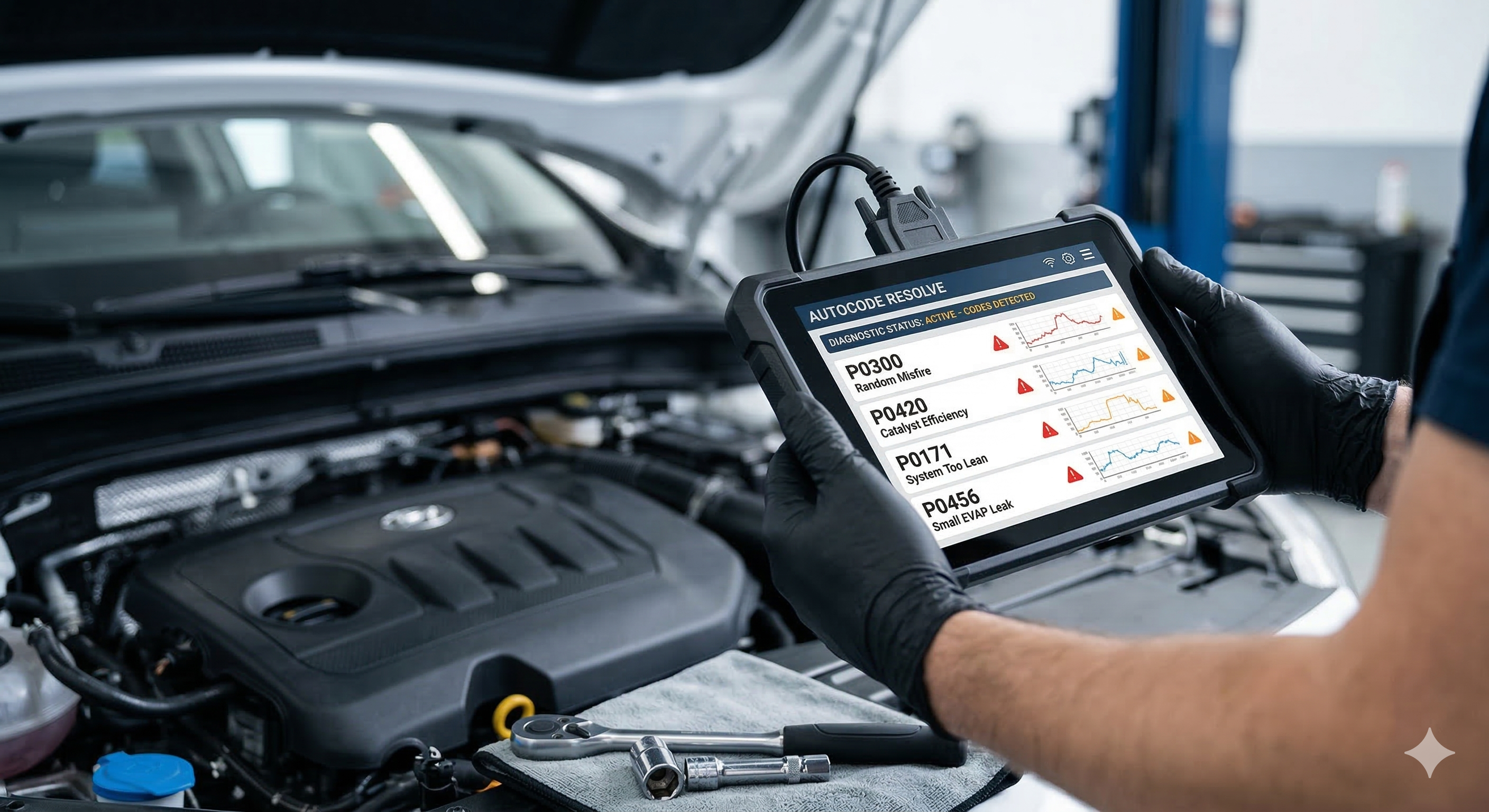
Quick Answer: What is P0300?
On a Chevy Silverado (especially the 5.3L V8), the P0300 code means that multiple engine cylinders are not firing correctly. The most common causes are worn-out spark plugs and wires, faulty ignition coils, or a leaking intake manifold gasket (very common on Chevy V8s).
1. Common Symptoms in a Chevy Silverado
A P0300 is rarely a silent code. You will definitely feel that something is wrong with your truck:
- Violent Shaking/Vibration: The truck feels like it's trembling, especially at idle or low RPMs.
- Flashing Check Engine Light: The system is warning you of severe catalytic converter damage.
- Strong Smell of Gas: Unburnt fuel is exiting through the tailpipe.
- Stalling or Hesitation: The engine struggles to accelerate and may shut off at stoplights.
2. Most Likely Causes (Ranked by Probability)
The P0300 is "random," meaning the computer can't pinpoint just one cylinder. Here is what usually causes a random misfire on a Silverado:
- Worn Spark Plugs and Wires (40% of cases): If your truck has over 100,000 miles and the original plugs, the gap has widened too much to create a proper spark.
- Intake Manifold Gasket Leak (30% of cases): A notorious issue on Chevy 5.3L engines. The plastic intake gaskets shrink over time, causing a massive vacuum leak that starves all cylinders of fuel.
- Weak Fuel Pressure (15% of cases): A dying fuel pump failing to deliver the required 50-60 PSI to the engine.
- Multiple Bad Ignition Coils (10% of cases): Coils tend to fail in pairs or clusters as they age.
3. Step-by-Step Diagnostic and Fix
Step A: The Spray Test for Intake Leaks
Since intake leaks are so common on Silverados, test this first. While the engine is idling (and shaking), spray a little bit of carburetor cleaner or brake parts cleaner around the edges of the plastic intake manifold on top of the engine. If the engine suddenly smooths out or the RPMs spike, you have found your leak. The gaskets must be replaced.
Step B: Inspect Plugs and Wires
Check the spark plug wires visually. Look for white "burn marks" or cracks where the spark might be jumping to the metal engine block instead of going to the spark plug. If they look old, a full tune-up (plugs and wires) is the next best step.
4. Estimated Repair Costs
Here is what you can expect to pay depending on what is causing the misfire:
| Repair Type | Estimated Cost (USD) |
|---|---|
| Replace Spark Plugs & Wires (DIY) | $80 - $120 |
| Replace Spark Plugs & Wires (Mechanic) | $250 - $400 |
| Replace Intake Manifold Gaskets | $350 - $600 |
| Replace Fuel Pump | $700 - $1,100+ |